

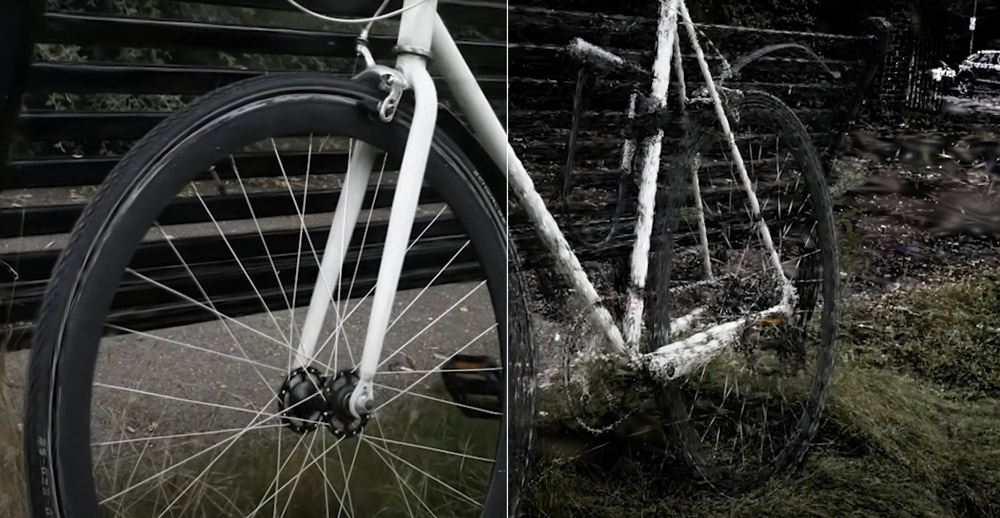
Stereo dual-lens cameras enhance Gaussian splatting with precise, real-time depth estimation, enabling artifact-free 3D reconstructions for VR applications. Building on foundational projects like 3DGS and 4DGS, stereo technology is unlocking new possibilities for immersive virtual reality experiences.
Gaussian splatting has revolutionized 3D scene reconstruction in virtual reality by modeling radiance fields with efficient 3D Gaussians. This approach enables fast rendering and immersive novel view synthesis, making it ideal for demanding VR applications where performance and visual quality are paramount.
The Power of Stereo Vision
Stereo cameras, featuring dual lenses that capture offset images, excel at computing accurate disparities to deliver metric depth maps. This capability positions stereo setups as the ideal solution for Gaussian splatting, particularly in VR environments where high-fidelity reconstruction is crucial.
The dual-lens design emulates human binocular vision, providing sub-pixel precision that accurately places and scales Gaussians. This precision minimizes common artifacts such as distortions or floating elements, especially in challenging scenarios like dynamic scenes or outdoor environments.
Cutting-Edge Stereo Technology
Modern stereo depth estimation has reached impressive performance levels. Fast-FoundationStereo from NVIDIA represents a breakthrough in this field, achieving zero-shot generalization at over 30 FPS. The model leverages advanced techniques including:
- Knowledge distillation for efficient inference
- Pseudo-labeling for robust performance across diverse scenes
- Real-time processing suitable for VR headset integration and interactive simulations
This real-time capability is essential for live reconstruction scenarios where users expect seamless, lag-free experiences.
Foundational Gaussian Splatting Projects
3D Gaussian Splatting (3DGS)
The original 3D Gaussian Splatting from Inria introduced real-time radiance field rendering using anisotropic splats. This breakthrough enabled:
- High-quality novel view synthesis
- Real-time performance on consumer hardware
- Sharp, detailed visual outputs
4D Gaussian Splatting (4DGS)
Building on 3DGS, 4D Gaussian Splatting from Huawei and collaborators extended the technology to handle dynamic scenes. Key achievements include:
- Support for time-varying content
- Maintaining 30+ FPS on consumer GPUs
- Enabling temporal consistency for animated VR experiences
Advanced Integration: SLAM and Large-Scale Environments
Recent innovations demonstrate the synergy between stereo vision and Gaussian splatting. As highlighted by MrNeRF on X, projects like Large-Scale Gaussian Splatting SLAM integrate stereo data for enhanced tracking and mapping.
The results are impressive:
- 70% improvement in tracking accuracy
- 50% enhancement in reconstruction quality
- Robust performance in expansive VR environments
This makes stereo-enhanced Gaussian splatting ideal for large-scale virtual worlds and complex spatial applications.
Key Questions and Insights
How does dual-lens disparity enhance Gaussian initialization?
Stereo disparity provides precise depth information that ensures optimal primitive placement. This is particularly valuable in textureless areas—common in VR scenes—where traditional structure-from-motion approaches struggle. The geometric constraints from stereo matching reduce initialization errors significantly.
Why prioritize real-time stereo for VR deployments?
Virtual reality demands low latency and high frame rates for comfortable, immersive experiences. Real-time stereo models enable:
- Seamless live reconstruction without perceptible lag
- Immediate feedback for interactive applications
- Integration with existing VR pipelines and headsets
What makes stereo robust for varied domains?
Stereo vision’s inherent cross-view consistency provides several advantages:
- Handling occlusions: Multiple viewpoints help resolve ambiguities
- Lighting invariance: Disparity is more robust than photometric features
- Geometric reliability: Baseline constraints reduce drift in reconstruction
These characteristics ensure reliable splat generation across diverse VR applications, from indoor environments to outdoor scenes.
Practical Applications
The combination of stereo cameras and Gaussian splatting opens numerous possibilities:
- VR Training Simulations: Accurate 3D reconstruction of real environments
- Virtual Tourism: High-fidelity capture of real-world locations
- Telepresence: Real-time 3D video communication
- Robotics: Spatial understanding for navigation and manipulation
- Architecture Visualization: Immersive walkthroughs of designed spaces
Future Directions
The field continues to evolve rapidly, with emerging research focusing on:
- Further optimization for mobile VR platforms
- Integration with neural rendering techniques
- Enhanced handling of specular and transparent surfaces
- Multi-modal fusion combining stereo with other sensors
Conclusion
Stereo dual-lens cameras represent a powerful enhancement to Gaussian splatting technology, particularly for VR applications. By providing precise, real-time depth estimation, they enable artifact-free 3D reconstructions that meet the demanding requirements of immersive virtual experiences.
As projects like Fast-FoundationStereo, 3DGS, 4DGS, and Large-Scale Gaussian Splatting SLAM continue to push boundaries, the combination of stereo vision and Gaussian splatting is positioned to become the standard for high-quality VR content creation.
For developers and researchers looking to implement these technologies, exploring projects like Fast-FoundationStereo provides an excellent starting point for understanding the state-of-the-art in stereo-enhanced Gaussian splatting.